Watching Your Athlete Struggle Under Pressure Is Hard.
You've Seen It Happen.
Your athlete makes a mistake.
The confidence disappears.
The body language changes.
The frustration takes over.
Maybe they shut down.
Maybe they melt down.
Maybe they break down.
And there you are on the sideline feeling frustrated.
Maybe a little embarrassed.
Definitely helpless.
Wondering:
"What am I supposed to do?"
"How do I help?"
"This was supposed to be fun."
You know something's going on.
You just don't know why or what to do about it.
If any of this sounds familiar, you're not alone. In fact, these are some of the most common frustrations parents experience in competitive youth sports.
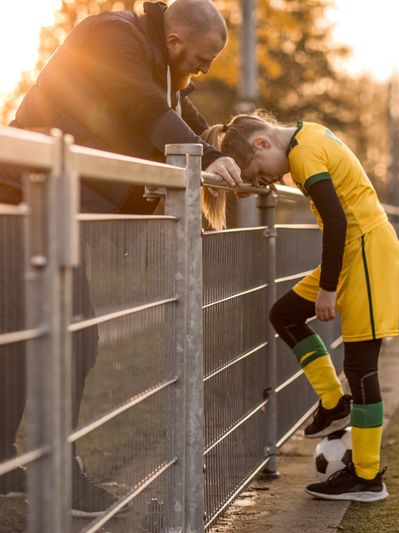

Do Any of These Sound Familiar?
Your athlete:
✓ Plays great in practice but struggles in games
✓ Gets emotional after mistakes
✓ Shuts down when things aren't going well
✓ Loses confidence quickly
✓ Gets defensive when coached
✓ Carries mistakes into the next play
✓ Lets one bad game ruin an entire weekend
✓ Seems capable of more than they consistently show
✓ Works hard but struggles under pressure
✓ Has talent but can't always access it when it matters most
If you're nodding your head right now, you're not alone.
Most parents can see something happening.
Very few understand what's actually driving it and what to do about it.

The Hardest Part Isn't Watching It Happen.
It's Not Knowing How To Help.
Most parents become accidental detectives.
You try encouraging.
You try challenging.
You try giving space.
You try talking about confidence.
You try talking about effort.
Sometimes it works.
Sometimes it doesn't.
And that's what makes it so frustrating.
Because you're trying to solve a problem you don't fully understand.
You can see the behavior.
But you can't see what's driving it.
Is it confidence? Fear of failure? Pressure? Frustration? Perfectionism? Something happening with their coach? Something I'm doing as a parent? Something else entirely?
Without understanding what's driving the behavior, every conversation feels like guesswork. And when you're guessing, it's hard to know how to help.
Why More Lessons Don't Always Solve The Problem
When athletes struggle during games, most families naturally look for skill-based solutions.
- Another lesson.
- More practice.
- Extra reps.
- A new coach.
And sometimes those things help.
But what happens when the skill is already there?
- What happens when your athlete looks great on Tuesday night and completely different on Sunday morning?
- What happens when the mechanics are there, but frustration, pressure, emotions, or self-doubt start getting in the way?
- What happens when they know what to do, but struggle to do it when pressure rises?
What if the issue isn't ability? What if it's how they're responding to pressure?
Because pressure changes things.
It changes confidence.
It changes emotions.
It changes decision-making.
It changes how athletes respond to mistakes, feedback, adversity, and expectations.
The challenge isn't always whether your athlete has the skill. Sometimes it's whether they can consistently access those skills when pressure enters the game.
And that's why so many parents feel stuck. They're trying to solve a performance-under-pressure challenge without fully understanding what's driving it.
The Human Side of Youth Athlete Development Gets Missed
Most youth sports development focuses on athleticism, skill development, and performance.
And those things matter. But there's another layer.
The human side.
- How athletes respond to pressure.
- How they handle mistakes.
- How they receive feedback.
- How they recover from setbacks.
- How they compete when expectations rise.
These moments shape how athletes compete today and who they become tomorrow.
Yet they're often the hardest things for parents and coaches to understand.
That's why we focus on Athlete Performance Behavior Development.
Because pressure reveals behavior. And behavior can be understood, measured, and intentionally developed.

Stop Guessing. Start Understanding.
The Athlete Performance Blueprint™ helps parents understand the performance behaviors shaping how their athlete competes, responds, recovers, and grows under pressure.
Not to label them.
Not to judge them.
Not to diagnose them.
To understand them.
Because understanding creates better conversations.
Better conversations create better development.
And better development creates better performance.
Through two athlete assessments, personalized reports, and practical development guidance, you'll gain a clearer picture of what's happening beneath the surface and what to do next.

Sports create opportunities to develop more than athletic skill.
Every game reveals how athletes respond to pressure, mistakes, feedback, adversity, and success.
Those moments shape performance today.
They also become the confidence, resilience, coachability, and leadership skills athletes carry into the rest of their lives.
Sports create opportunities to develop more than athletic skill.
Every game reveals how athletes respond to pressure, mistakes, feedback, adversity, and success.
Those moments shape performance today.
They also become the confidence, resilience, coachability, and leadership skills athletes carry into the rest of their lives.